What does daily life in Magnolia actually feel like once you are past the postcard views? For many people, that is the real question. If you are considering a move or simply trying to understand the neighborhood better, Magnolia stands out for its small-radius routines, easy access to parks, and constant connection to the water. Let’s dive in.
Why Magnolia Feels So Local
Magnolia has a rhythm that feels different from many other Seattle neighborhoods. King County describes it as primarily residential and somewhat isolated, with only three access points connecting it to the rest of the city. That geography helps explain why so much of daily life happens close to home.
At the center of that routine is Magnolia Village. The historic commercial core around West McGraw Street and 34th Avenue West still serves as the neighborhood’s main gathering point, with the farmers market located at W McGraw Street and 33rd Ave W reinforcing that village feel.
That local pattern also shows up in how people use the area. In an SDOT intercept survey in Magnolia Village, common reasons for visiting included shopping, running errands, eating out, and stopping at the post office. Residents also reported walking to the village almost as often as driving alone, which suggests a neighborhood built around repeat daily habits rather than all-day destination trips.
Coffee and Errands in Magnolia Village
If you want to picture a typical Magnolia morning, start on McGraw. Uptown Espresso at 3223 W McGraw St opens at 6 a.m. on weekdays and 7 a.m. on weekends, making it an easy stop before work, school drop-off, or a walk through one of the nearby parks.
Just across the street, Serendipity Cafe and Lounge at 3222 W McGraw offers another everyday option. It serves breakfast, lunch, and dinner, with café hours from 7:30 a.m. to 8 p.m. daily, along with locally made pastries and coffee drinks.
From there, errands stay simple. Metropolitan Market at 3830 34th Ave W positions itself as a neighborhood grocer and even notes that it is a convenient place to grab a bite or drink on the way to Discovery Park.
Not every practical stop in Magnolia is retail. The Magnolia Branch of The Seattle Public Library at 2801 34th Ave W offers Wi-Fi, public computers, meeting and study rooms, free parking, and 24/7 book returns, which adds another layer to everyday convenience in the neighborhood.
Parks Shape the Daily Routine
Magnolia’s outdoor access is not just a bonus. It is part of how many people structure their day. Whether you want a long trail outing or a quick walk with a view, the neighborhood gives you several easy options.
Discovery Park for Longer Walks
Discovery Park is Seattle’s largest park at 560 acres. It includes trails, two miles of protected tidal beaches, meadows, sea cliffs, forest groves, dunes, thickets, and streams.
Seattle Parks also lists practical amenities like restrooms, play areas, drinking fountains, tennis courts, and basketball courts. That mix makes Discovery Park useful for both full weekend outings and ordinary weekday walks when you just need to get outside.
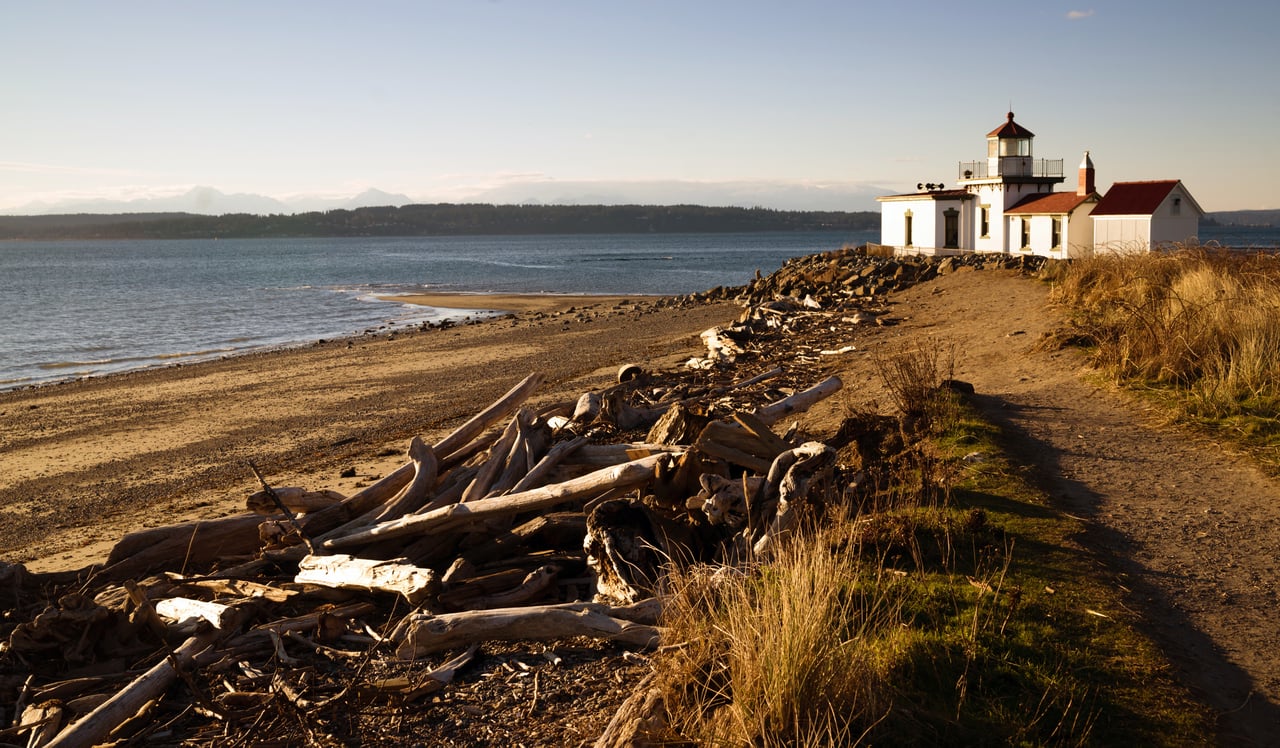
Boating access near West Point Lighthouse adds another reminder that in Magnolia, land and water are closely connected. The park is not tucked away from daily life. It is one of the reasons the neighborhood’s outdoor identity feels so immediate.
Magnolia Park for Quick Views
If you want something shorter and easier to fit into the day, Magnolia Park is a strong option. Located on Magnolia Boulevard West, it offers Puget Sound views along with picnic sites, tennis courts, grills, restrooms, a play area, and drinking fountains.
That makes it ideal for the kind of outing that does not need much planning. You can stop by for fresh air, a short break, or a simple change of scenery without committing to a full afternoon.
Kiwanis Preserve for Another Trail Option
Kiwanis Memorial Preserve Park sits one block east of Discovery Park. Seattle Parks identifies it as Seattle’s first wildlife sanctuary, giving Magnolia yet another trail-and-view option within the neighborhood.
It is a useful reminder that Magnolia’s outdoor character goes beyond one famous park. The area supports a broader pattern of casual nature access that can easily become part of your weekly routine.
The Water Is Part of Everyday Life
In Magnolia, the water is not just something you see from a scenic overlook. It shows up in the neighborhood’s geography, its parks, and in some cases its day-to-day infrastructure.
King County’s 2025 area report notes that Magnolia’s waterfront includes high-bank Puget Sound properties and low-bank Shilshole Bay properties. It also states that some low-bank parcels include private moorage buoys or docks for direct marine access.
Even if you are not a boater, the shoreline still shapes the experience of living here. Magnolia Park and Discovery Park provide bluff-top views over Puget Sound, while Magnolia Tidelands Park adds another point of contact with the shoreline below Magnolia Bluff.
Elliott Bay Marina Adds a Working Waterfront
Elliott Bay Marina at 2601 West Marina Place brings another layer to Magnolia’s relationship with the water. The marina says it offers more than 1,200 slips, full-service moorage, 24/7 security, shore power, water hookups, fuel, pump-out services, restaurants, and a ship’s store.
That matters because it makes the waterfront feel active, not just scenic. For some residents, the water is part of recreation. For others, it is part of their routine route through the neighborhood or their broader connection to Puget Sound.
A Realistic Day in Magnolia
One of the easiest ways to understand Magnolia is to imagine the neighborhood as a small loop. You grab coffee in the village, take care of a few basics, head to a park, and circle back for groceries, a casual meal, or a quick stop at the library.
That pattern fits the research especially well. The combination of a compact village core, major park access, and visible shoreline gives Magnolia a lifestyle that feels both tucked away and practical.
For buyers, that can be a big part of the appeal. You are not choosing Magnolia just for a house. You are also choosing a neighborhood where daily life often feels grounded, familiar, and close to the outdoors.
For sellers, that everyday rhythm matters too. Buyers often respond strongly to neighborhoods that offer a clear sense of place, and Magnolia has one of the most distinct in Seattle.
Why This Matters When You Move
When you are deciding where to live, the little things usually become the big things. Where you get coffee, where you walk, how easily you can run errands, and whether you can see or reach the water on an ordinary Tuesday all shape how a neighborhood feels over time.
Magnolia stands out because those pieces connect so naturally. Its residential setting, village center, major parks, and waterfront presence create a daily experience that is calm, useful, and easy to picture.
If you are thinking about buying or selling in Magnolia, local context makes a difference. Michael Green brings Magnolia roots, neighborhood fluency, and a strategic approach to helping clients understand how lifestyle and positioning shape real estate decisions.
FAQs
What is everyday life like in Magnolia, Seattle?
- Everyday life in Magnolia often centers on close-to-home routines, with coffee, errands, park walks, and casual meals clustered around Magnolia Village and the neighborhood’s parks.
Where do people get coffee in Magnolia Village?
- Two well-known options in Magnolia Village are Uptown Espresso at 3223 W McGraw St and Serendipity Cafe and Lounge at 3222 W McGraw.
What parks are part of daily life in Magnolia?
- Discovery Park, Magnolia Park, and Kiwanis Memorial Preserve Park are key outdoor spots that support everything from longer trail walks to quick neighborhood outings.
How does the water shape life in Magnolia?
- The water is part of Magnolia’s daily setting through Puget Sound views, shoreline park access, marina activity, and some waterfront properties with direct marine access.
Where can you run errands in Magnolia?
- Common practical stops include Magnolia Village businesses, Metropolitan Market, the Magnolia Farmers Market, and the Magnolia Branch of The Seattle Public Library.
Is Magnolia more residential or commercial?
- Magnolia is primarily residential, with a compact village-style commercial core that supports many of the neighborhood’s everyday needs.